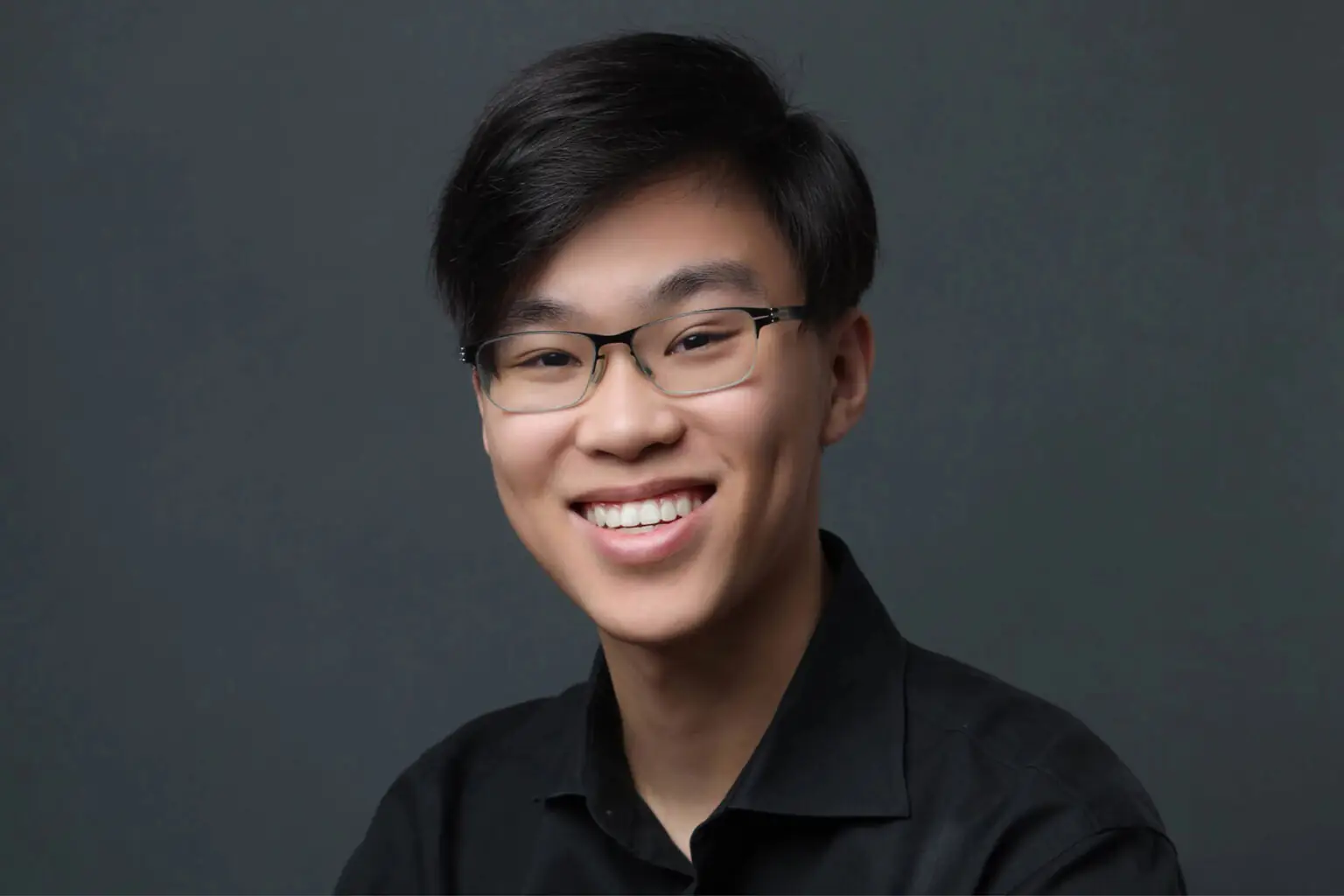
Raphael Kwok: From Game Design to Medical Research
St. Michael’s proudly embraces students across every field of study in the Faculty of Arts and Science at the University of Toronto. This series profiles students in the STEM disciplines who are approaching their work in fascinating ways, and uncovers how St. Michael’s has supported them along the way.
St. Michael’s student Raphael Kwok applies the principles of game design to his medical research, an approach that places audience, interaction, and human experience at the centre of scientific innovation.
“In game design, you think about who you’re designing for, the medium you’re using, and what message you want to convey,” he says. “That kind of thinking isn’t always emphasized in STEM courses, but it’s been incredibly valuable in my work.”
“Designing for a game is different from filming a video or writing a book, it’s a very interactive piece of media so there are many more considerations that must be made in terms of audience, not just they how they will view it, but also how they will interact with it, and that’s the part I find interesting. While I enjoy programming, it’s a means to an end to building something with an interesting design,” he says.
Raphael chose to study at the University of Toronto for its reputation as one of Canada’s top institutions for biomedical research. There, he discovered opportunities that sit at the intersection of life sciences and technology.
A strong science student in high school, Raphael taught himself game development as a hobby by learning to code and creating art for video games. Now in his final year, he is majoring in neuroscience and specializing in pathobiology, with his studies enriched by several research projects.
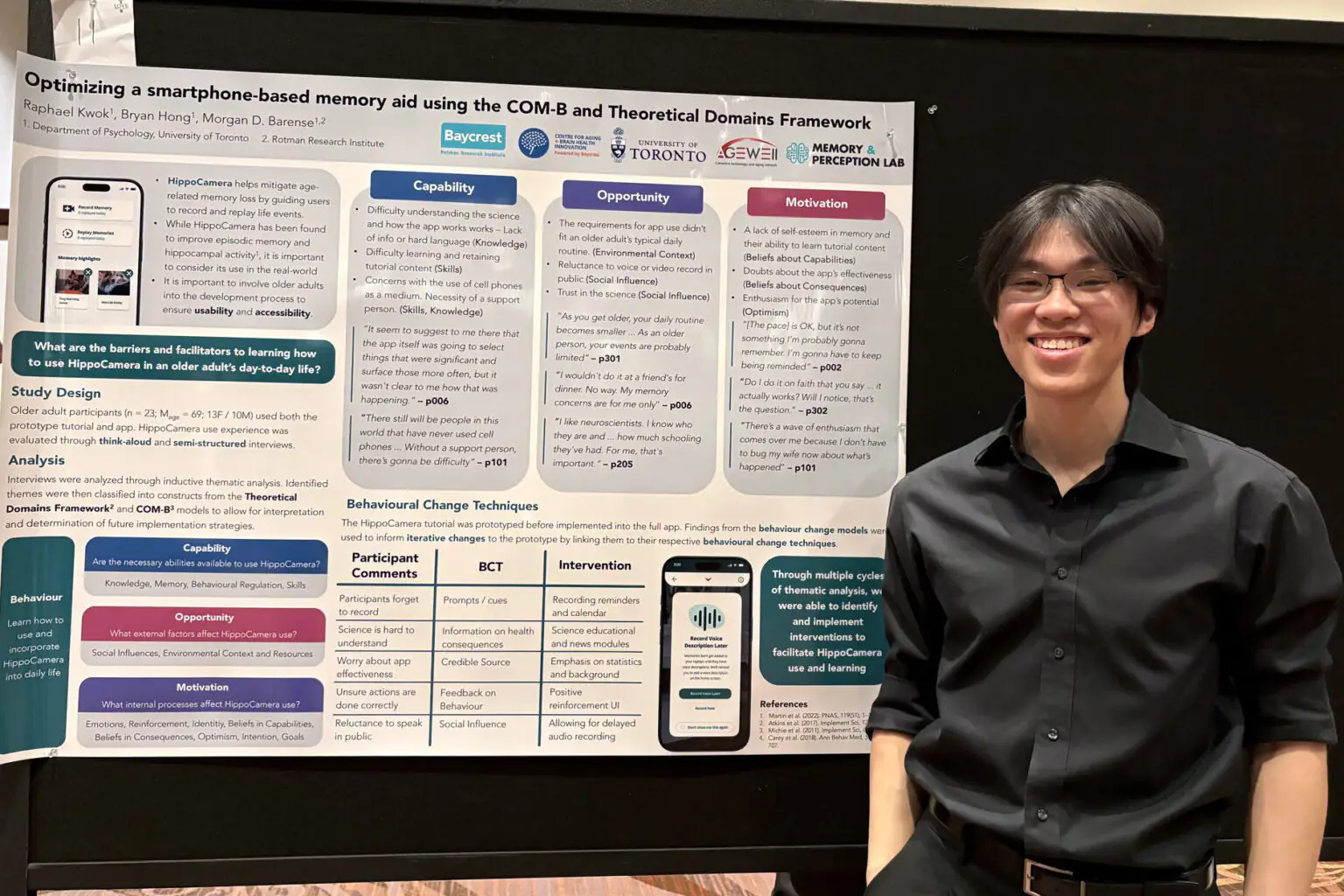
In his first year, he joined the Barense Memory and Perception Lab in the Department of Psychology, where he worked on a mobile app designed to serve as a memory aid for older adults concerned about memory loss or cognitive impairment. His game development background proved valuable, particularly in user interaction and user experience design.
“The project was especially interesting because designing for older adults is very different from designing for everyone else,” he says. “There were a lot of unique considerations to think through.”
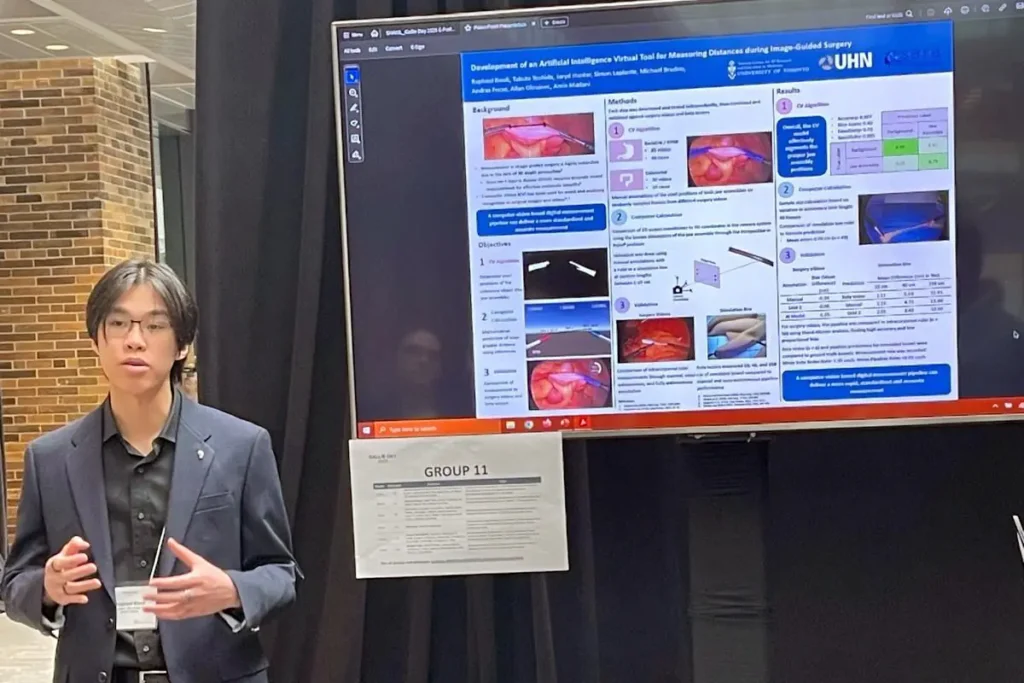
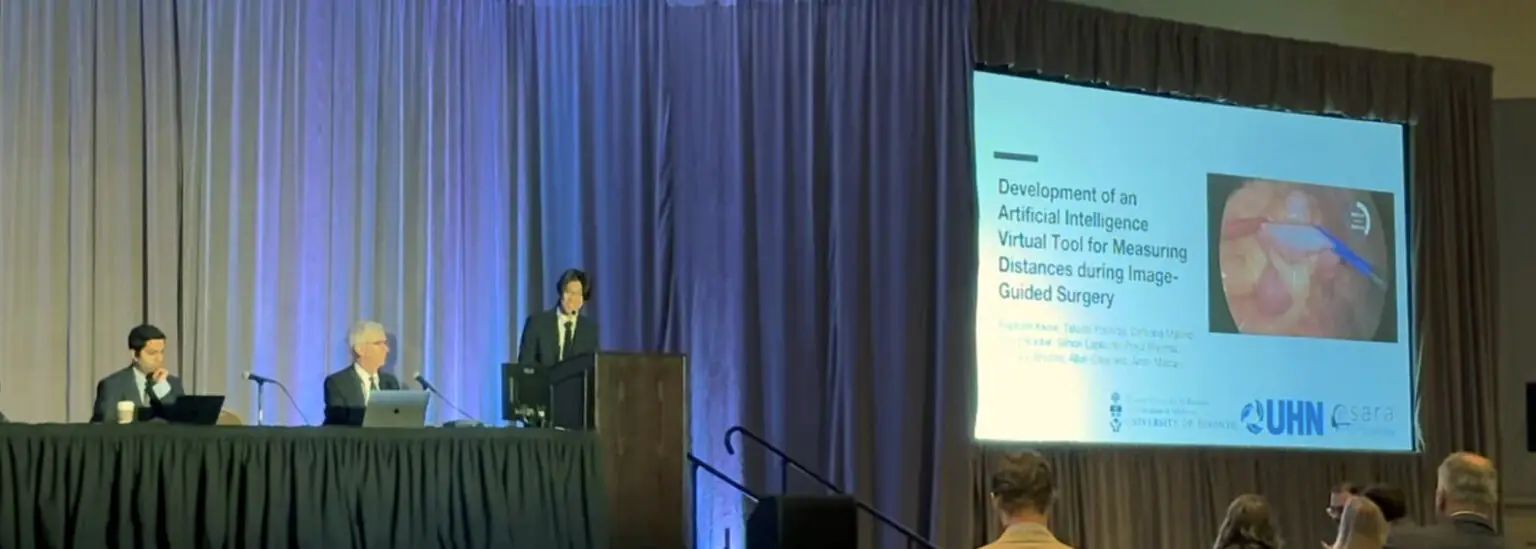
In his second year, he worked under Dr. Madani at the Surgical AI Research Academy (SARA) at the University Health Network (UHN) working on a measurement tool for laparoscopic surgery. The work was more technical, involving training a computer vision algorithm. The findings showed that the tool outperformed traditional measurement methods used by surgeons, and the results were recently published in Surgical Endoscopy.
More recently, Raphael has been involved in a collaborative project between the SARA Lab and the Vector Institute. The project focuses on creating a 3D model of the gallbladder to make laparoscopic removal easier and more precise.
Raphael credits St. Michael’s College with helping him transition into university life, particularly on the social side. In his first year, he participated in the St. Mike’s First-Year Check-In program, which pairs first-year students with a professor from an unrelated field. He was matched with Professor Iris J. Gildea from the Book & Media Studies program.
“She was very interesting to talk to,” he says. Coming from a background where success was often measured quantitatively, Kwok appreciated Professor Gildea’s humanities-based perspective that that he describes as collaborative in nature.
He was also part of a first-year learning community that connected students enrolled in the same classes. As a commuter, Raphael initially worried he would struggle to connect with classmates, since he planned to spend minimal time on campus. His involvement in the program gave him more reason to stay and socialize.
“Being able to interact with other first-year St. Mike’s students was really valuable in helping me transition from high school to university,” he says.
As he prepares to graduate this spring, Raphael says emails from the St. Michael’s Principal’s Office highlighting scholarship opportunities have been invaluable. One of these was the Rhodes Scholarship. Although his application did not advance, he found the process meaningful. “The self reflection I did for the Rhodes Scholarship has helped me as I write my grad school applications,” he says.
Raphael also accessed writing support through the Academic Success Centre for scholarship and graduate school applications. As a STEM student, he admits writing is not his strongest skill.
“The strategies they showed me were really helpful,” he says. “Talking with the writing instructors was eye-opening. There are a lot of considerations when writing that I hadn’t thought about and that support will carry over into writing research publications.”
As he prepares to graduate, Raphael is considering several paths, including medical school or continuing research in medical technology. Whatever direction he chooses, he envisions a future himself designing and building tools—whether for use in the operating room, hospital administration, or diagnostics—that prioritize usability, accessibility and the people who rely on them.