Seven St. Michael’s Students Named Student Leaders

News St. Mike's Students

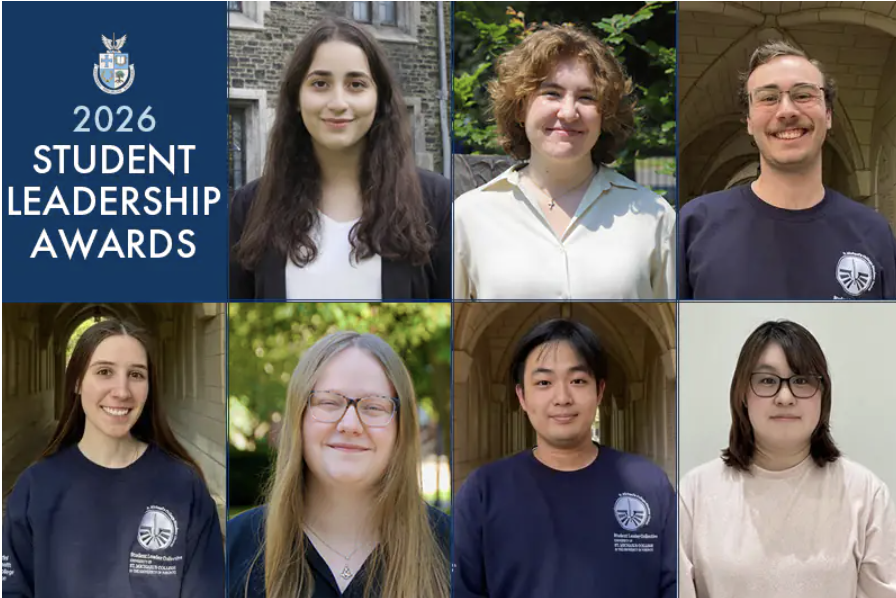
Seven graduating St. Michael’s students have earned the University of Toronto’s highest recognition for the meaningful difference they have made on campus and beyond. Through their leadership, compassion, and drive, they have helped shape a more connected, inclusive, and vibrant university community. For their contributions they will receive this year’s University of Toronto Student Leadership Awards, which recognize outstanding student leadership, volunteer service, and commitment to the university.

Recipients were nominated by staff, faculty, librarians, and alumni from St. Michael’s College.

Meet the student leaders whose contributions have made an impact:

Sara Beaini helped transform St. Michael’s into a more welcoming place for all students by championing inclusivity and belonging through her leadership of Pride SMC.

As student campus minister, Bridget Bowles engaged in campus outreach to serve the local unhoused community. She also brought a diverse community together through a shared love of Dante Alighieri’s Divine Comedy by leading the Dante Reading Group.

Thomas James Gillespie served the St. Michael’s community in his roles as St. Michael’s College Student Union (SMCSU) Vice President of Finance and student campus minister. Throughout his tenure, he promoted transparency to help students better understand available opportunities and services, while working to forge strong new community bonds across the college.

SMCSU Vice President of Mental Health Clizia Martini has been a tireless advocate for student well-being. She focused her efforts on improving mental health accessibility across campus, with a particular emphasis on prevention and proactive support.

Katie McBain rebuilt the Celtic Studies course union following the pandemic by organizing events that grew student interest in the field and strengthened the academic community around Celtic Studies.

Sun Jaehyun Sur combined a deep passion for science with active engagement in undergraduate medical research, sharing his findings at the SMC Undergraduate Research Colloquium. He also worked behind the scenes to ensure successful student elections, drawing on his experience as an eight-time Chief Returning Officer.

Michelle Sum Yee Wong enriched student life on two fronts: amplifying student voices as President of the Book & Media Studies Student Association and nurturing a culture of creativity and expression as Arts Editor at The Mike.

St. Michael’s will present the winners with their awards at a banquet in Father Madden Hall on April 1st.

For more information about the Student Leadership Award and the 2026 recipients, visit University of Toronto Student Leadership Awards | University of Toronto Alumni.

Two Medieval Studies students have created a splash with their translation of a 13th-century Biblical-miracle play, a work they hope to see published soon.

Meagan Mellor and Lauren Saxberg were studying the play La Seinte Resurreccion, which is believed to date back to about 1255, when they determined the translation was problematic. Written in Anglo-Norman, a dialect of Old Norman that was in use from 11th to the 15th century in England, Ireland and Wales, the play details the passion of Christ. It survives today as a fragment of about 360 lines, detailing the passion of Christ, although the title does suggest the original dealt with the resurrection as well.

Meagan and Lauren “felt that the translation used in Professor Matthew Sergi’s ENG330: Medieval Drama was flawed and decided to work with the original manuscripts to produce something better,” explains Professor Alison More, who holds the Comper Professorship in Medieval Studies at the University of St. Michael’s College. The last professional translation was David Bevington’s edition in 1975.

Determined to do the work justice, the two students took on an independent study course with Professor Matthew Sergi, of the University of Toronto’s English Department, to improve on the manuscript. At the end of the fall semester Lauren and Meagan oversaw a reading of their translation in the Medieval World Drama Working Group.

Part of the challenge of the flawed translation likely rests with the scribe who copied down the fragment the students have examined.

“It’s a mess!,” Lauren says of the version they are working with. “The scribe did a terrible job. We think it’s a copy.”

The manuscript the students are working with to create an improved translation resides at the Bibliothèque nationale de France in Paris. While there is another copy of the manuscript at the British Library, they were unable to access it. Lauren notes that being unable to cross-reference the work placed additional emphasis on the skills they had learned in Professor More’s MST358: Medieval Book

Noting that they text they were examining is “very dry,” Meagan explains that, as translators, they tried to return to the tone of the era’s liturgical drama. “While they were performed in a religious setting, medieval performances were not boring,” she says, adding that medieval plays were often known to include an earthy, flippant, and at even bawdy, tone, celebrating the human experience, a reality they hope is better reflected in their translation of secondary characters in the play.

The process of re-translating the fragment meant “stripping it down to the bare bones,” says Lauren.

The two were conscious of looking for the “same syllabic metre and verbal flow” as found in other plays of the era written in Anglo Norman, a dialect that is not as well known as others of that vintage, says Meagan.

While the two students are members of New College, their dedication to the Middle Ages – Meagan is an English specialist and medieval studies major while Lauren is an English and religion major with a minor in medieval studies – the translation process meant spending a great deal of time at St. Mike’s, which sponsors the Medieval Studies program.

“I’d never spent so long on a course,” says Lauren, who cites the “great resource” of the Pontifical Institute of Mediaeval Studies’ library on the fourth floor of the John M. Kelly Library, as well as the ongoing encouragement of Professor More, who helped translate previously untranslated Latin additions to the manuscript, and Professor Emerita  Ann Hutchison of PIMS, who was an “enthusiastic supporter,” including pointing out the project to others who might offer help and inviting the students to the teas she hosts at PIMS, the translators add.

Now the students are focussed on preparing their translation for publication, a truly impressive accomplishment for two undergraduates. Hosted by Professor Sergi, the read-through at the Medieval was received enthusiastically, with Professor More and Professor Rita Copeland reading the parts of two of the soldiers.

Recently, Meagan, who is the co-president of the Medieval Studies Undergraduate Society,  participated in the two-day Medieval Women Workshop: Authority and Observance at PIMS, presenting on women players in Chester’s mediaeval Drama, and Meagan and Lauren will present their current research at St. Mike’s Undergraduate Research Colloquium, which runs March 5 and 6 in the Kelly Library.

Lauren, who plans to continue graduate studies focused on medieval religious literature, and Meagan, who plans to pursue graduate studies in medieval literature and manuscript culture, say one of the many reasons they have enjoyed their work in medieval studies is that the period is nothing like many preconceptions, and that the relatively small academic field is populated with people who are passionate about attention to detail.

It is also, Meagan notes, a field that has not yet been heavily influenced by artificial intelligence, which makes their hands-on work in translation especially important.

St. Michael’s proudly embraces students across every field of study in the Faculty of Arts and Science at the University of Toronto. This series profiles students in the STEM disciplines who are approaching their work in fascinating ways, and uncovers how St. Michael’s has supported them along the way.

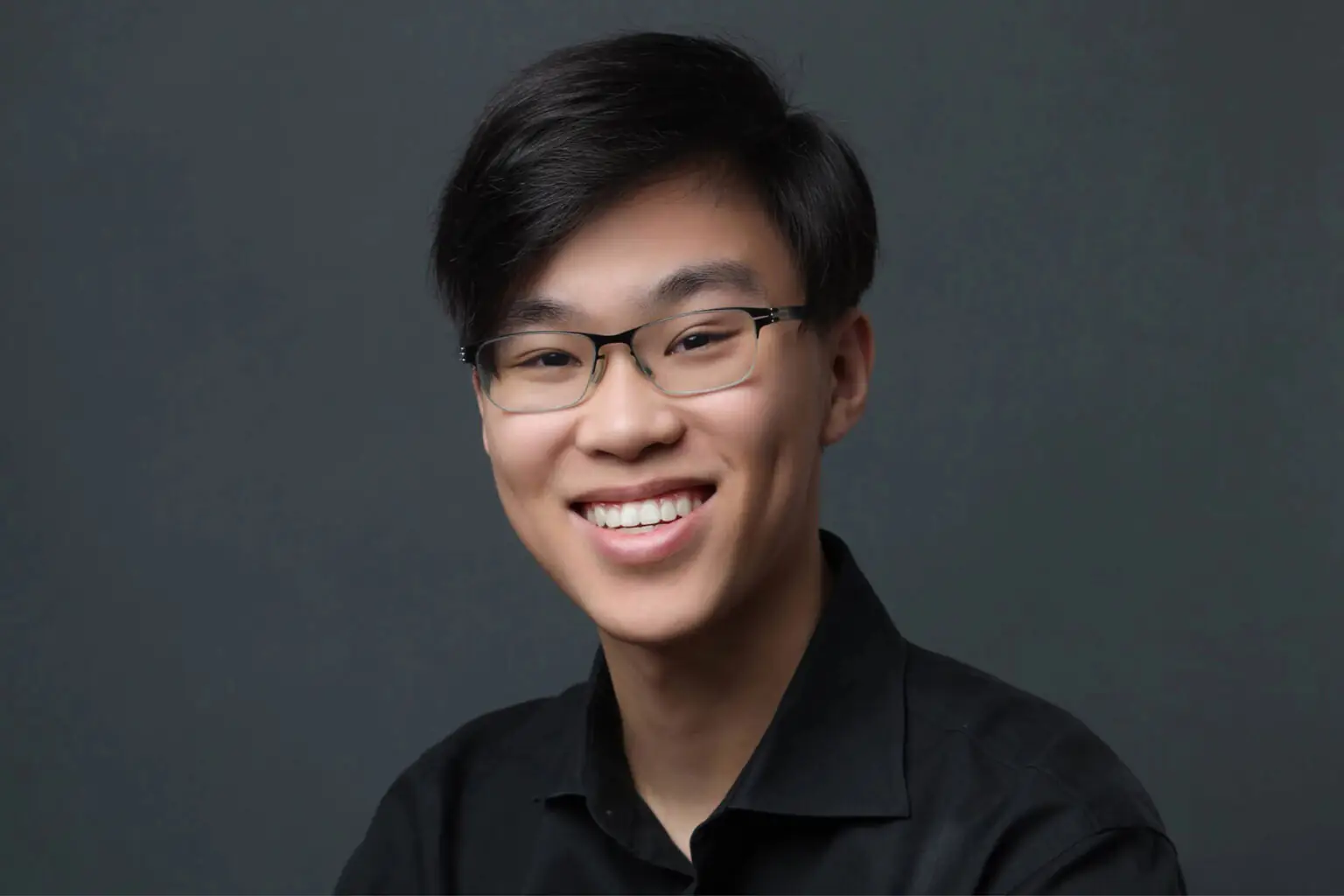
St. Michael’s student Raphael Kwok applies the principles of game design to his medical research, an approach that places audience, interaction, and human experience at the centre of scientific innovation.

“In game design, you think about who you’re designing for, the medium you’re using, and what message you want to convey,” he says. “That kind of thinking isn’t always emphasized in STEM courses, but it’s been incredibly valuable in my work.”

“Designing for a game is different from filming a video or writing a book, it’s a very interactive piece of media so there are many more considerations that must be made in terms of audience, not just they how they will view it, but also how they will interact with it, and that’s the part I find interesting. While I enjoy programming, it’s a means to an end to building something with an interesting design,” he says.

Raphael chose to study at the University of Toronto for its reputation as one of Canada’s top institutions for biomedical research. There, he discovered opportunities that sit at the intersection of life sciences and technology.

A strong science student in high school, Raphael taught himself game development as a hobby by learning to code and creating art for video games. Now in his final year, he is majoring in neuroscience and specializing in pathobiology, with his studies enriched by several research projects.

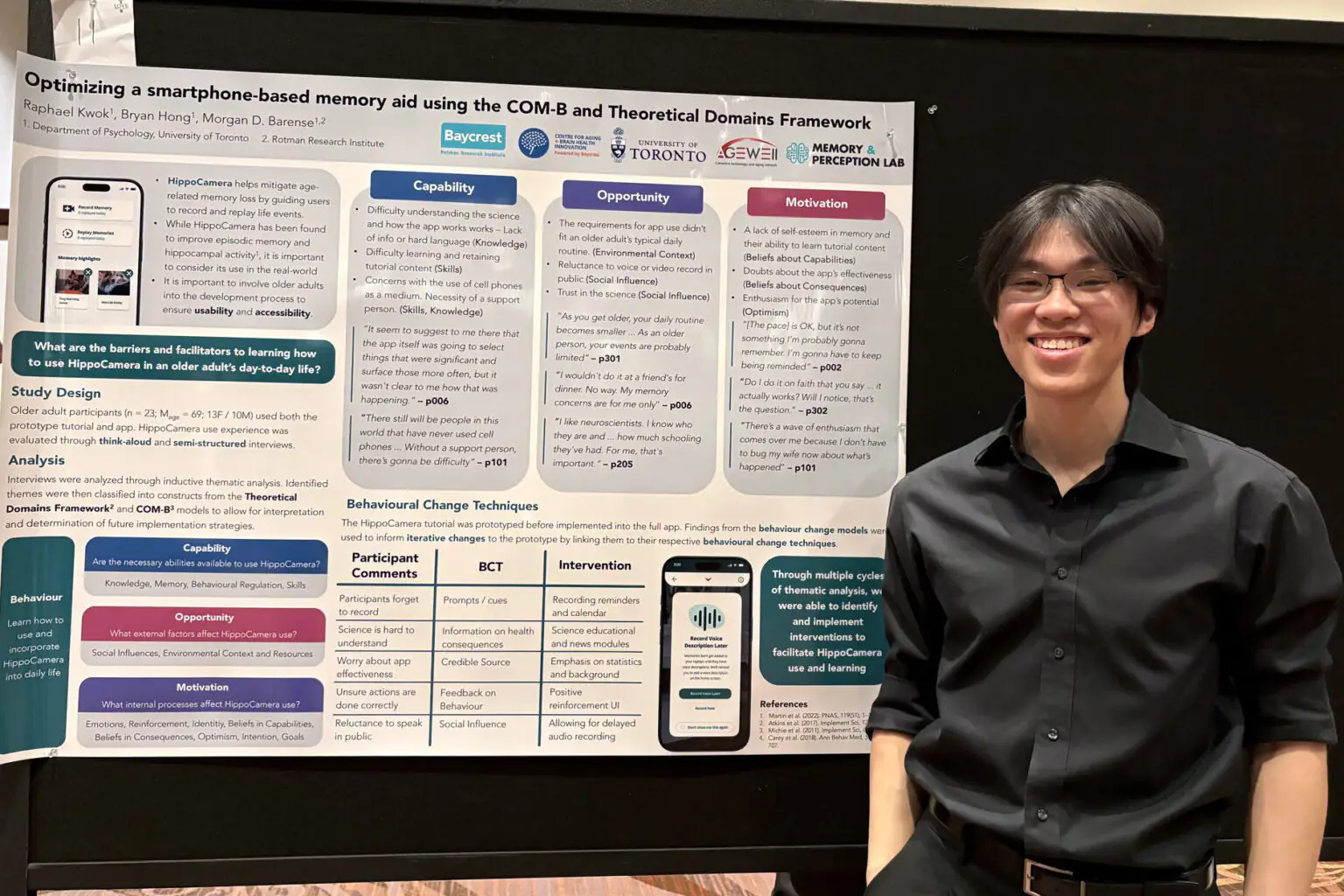
In his first year, he joined the Barense Memory and Perception Lab in the Department of Psychology, where he worked on a mobile app designed to serve as a memory aid for older adults concerned about memory loss or cognitive impairment. His game development background proved valuable, particularly in user interaction and user experience design.
“The project was especially interesting because designing for older adults is very different from designing for everyone else,” he says. “There were a lot of unique considerations to think through.”

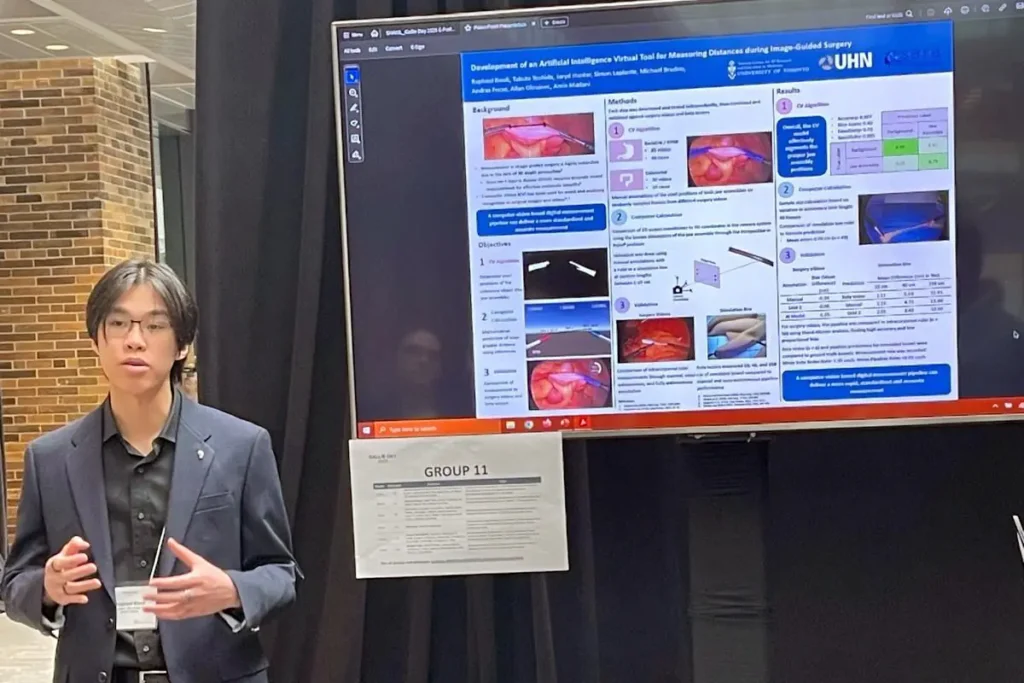
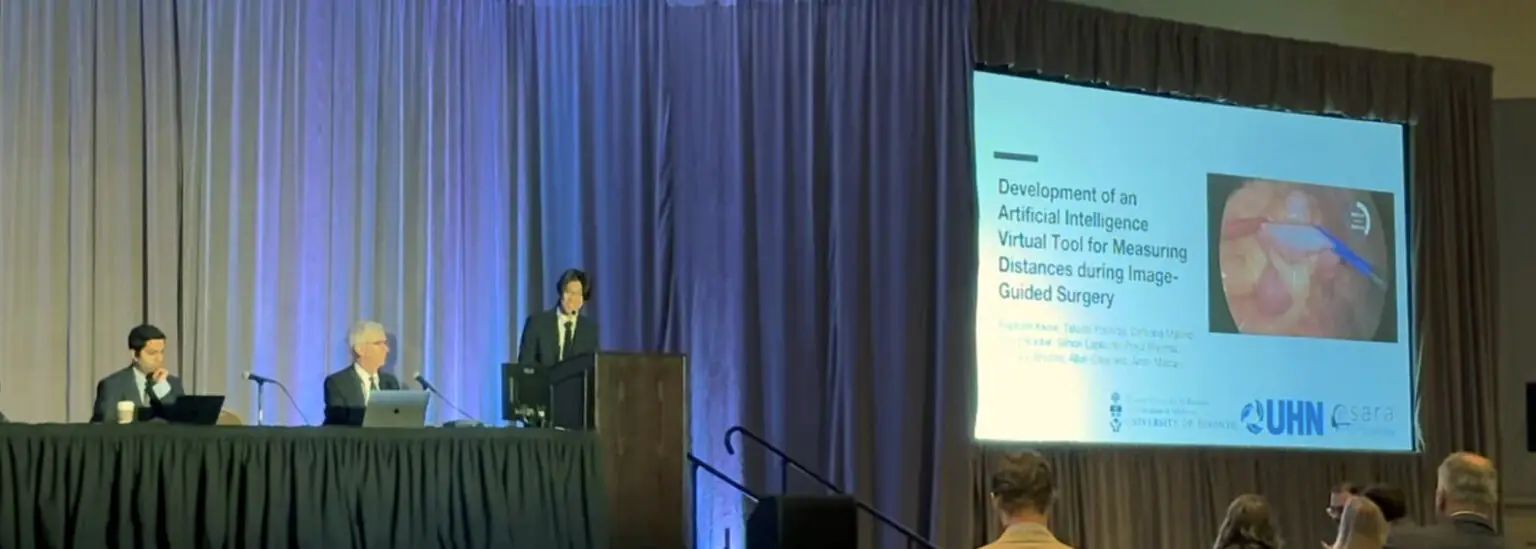
In his second year, he worked under Dr. Madani at the Surgical AI Research Academy (SARA) at the University Health Network (UHN) working on a measurement tool for laparoscopic surgery. The work was more technical, involving training a computer vision algorithm. The findings showed that the tool outperformed traditional measurement methods used by surgeons, and the results were recently published in Surgical Endoscopy.

More recently, Raphael has been involved in a collaborative project between the SARA Lab and the Vector Institute. The project focuses on creating a 3D model of the gallbladder to make laparoscopic removal easier and more precise.

Raphael credits St. Michael’s College with helping him transition into university life, particularly on the social side. In his first year, he participated in the St. Mike’s First-Year Check-In program, which pairs first-year students with a professor from an unrelated field. He was matched with Professor Iris J. Gildea from the Book & Media Studies program.

“She was very interesting to talk to,” he says. Coming from a background where success was often measured quantitatively, Kwok appreciated Professor Gildea’s humanities-based perspective that that he describes as collaborative in nature.

He was also part of a first-year learning community that connected students enrolled in the same classes. As a commuter, Raphael initially worried he would struggle to connect with classmates, since he planned to spend minimal time on campus. His involvement in the program gave him more reason to stay and socialize.

“Being able to interact with other first-year St. Mike’s students was really valuable in helping me transition from high school to university,” he says.

As he prepares to graduate this spring, Raphael says emails from the St. Michael’s Principal’s Office highlighting scholarship opportunities have been invaluable. One of these was the Rhodes Scholarship. Although his application did not advance, he found the process meaningful. “The self reflection I did for the Rhodes Scholarship has helped me as I write my grad school applications,” he says.

Raphael also accessed writing support through the Academic Success Centre for scholarship and graduate school applications. As a STEM student, he admits writing is not his strongest skill.

“The strategies they showed me were really helpful,” he says. “Talking with the writing instructors was eye-opening. There are a lot of considerations when writing that I hadn’t thought about and that support will carry over into writing research publications.”

As he prepares to graduate, Raphael is considering several paths, including medical school or continuing research in medical technology. Whatever direction he chooses, he envisions a future himself designing and building tools—whether for use in the operating room, hospital administration, or diagnostics—that prioritize usability, accessibility and the people who rely on them.

A new endowment created by the Friends of the Kelly Library (FOTKL) to support the acquisition of rare and important materials will enhance the student experience while also serving as a lasting testament to the dedication of some of St. Michael’s hardest-working volunteers.

The Friends announced at their recent general meeting that they have committed $100,000 to create the Special Collections Acquisitions Endowment Fund. Funds will be gifted after the 2026 book sale as part of a legacy initiative connected to the University’s 175th anniversary in 2027, says James Roussain, who is the William D. Sharpe Chief Librarian and Director of Special Collections at the John M. Kelly Library.

“The library is deeply grateful for the Friends’ generosity in establishing this endowment, a lasting investment that strengthens our collections and supports the Kelly Library’s students, scholars, and mission,” says Roussain.

The fund will support the acquisition of rare and distinctive materials for the library’s Special Collections: Archives and Rare Books division, enhancing undergraduate learning through works from non-Western traditions, non-traditional book forms, and materials that build on the library’s established collections.

The library’s first fund dedicated solely to supporting the acquisition of rare and important materials, the endowment will ensure that resources will be available in perpetuity to enhance and expand the collections that distinguish the Kelly Library and support faculty, students, and academic programs. All acquisitions supported through this fund will include the acknowledgement: “Acquired with the support of the Friends of the Kelly Library.”

The acquisitions will be “a means to support our programs in meaningful ways,” Roussain adds.

Funds will become available for use beginning May 1, 2027. Over time, the availability of funds will increase as the endowment continues to generate earnings. Additional donations to this endowment will gladly be accepted from willing donors.

The Friends have raised an impressive $556,903 since the book sale was launched in 2004, and a further $70,000 has been raised and will be directed to the new fund, says Liz Gilbert, who is the President of the volunteer group. This initiative represents an important milestone for the Friends and is the first permanent legacy project of this scope that they have undertaken.

“The Friends are committed to ensuring that the library continues its vital mission of supporting personal and intellectual endeavours of all those who study and work at the University of St. Michael’s College now, and in the future,” Gilbert says.

The annual fall book sale, now a tradition on campus, takes a year’s worth of preparation, with volunteers sorting donations year-round. (Up to six boxes of books can be dropped off at the Kelly’s front desk. For larger donations the library asks donors to arrange a drop-off time.) The group also hosts pop-up book sales as well as lectures, and they support various exhibitions hosted by the Kelly.

“They are not in it for the glory,” Roussain says, smiling.

This year’s sale will run from September 30 to October 3. Stay tuned for more exciting developments.

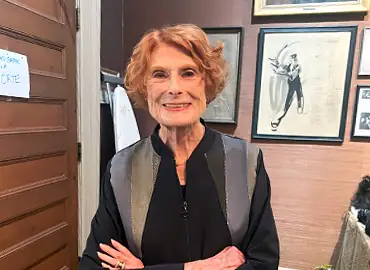
The University of St. Michael’s College community mourns the passing of Professor Paulette Collet, emerita professor of French at the University of Toronto and a beloved member of the University of St. Michael’s College community.

Born in Verviers, Belgium, Professor Collet’s life was marked by courage, scholarship, and an enduring devotion to French language and theatre. After fleeing Nazi-occupied Belgium as a child and completing her education in London at King’s College London, she went on to serve as an education officer in Mauritius before earning her Ph.D. at Université Laval. Following teaching appointments in the United States, she made her academic home at St. Michael’s College, where she inspired generations of students with her dynamism, creativity, and unwavering commitment to excellence in French studies.

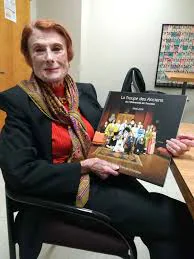
In 1969, encouraged by colleagues in the French Department, Professor Collet single-handedly founded La Troupe des Anciens de l’Université de Toronto, a Molière-inspired theatre company dedicated to bringing French theatre to life and helping students truly inhabit the language they were learning. What began as le Cercle français at St. Mike’s grew into a vibrant intercollegiate troupe that, for more than 50 years, captivated audiences, championed francophone plays, and created a space where students and alumni could experience French not only as a subject of study, but as a living art.

A gifted singer and actor herself, Professor Collet believed deeply that learning mattered as much as performance. She was particularly passionate about pronunciation—often reminding students, with a mixture of wit and resolve, that enunciation was essential to honouring the beauty of the French language. Her rehearsals were rigorous, her standards high, but her love of teaching unmistakable. Through theatre, she fostered confidence, discipline, and joy in her students, profoundly shaping the culture of the French Department at St. Michael’s and the wider University.

In recent years, La Troupe des Anciens entrusted its rich archival collection—posters, programs, photographs, recordings, and a commemorative volume marking 50 years of French theatre in Toronto—to the St. Michael’s College Archives and the John M. Kelly Library, ensuring that Professor Collet’s legacy will continue to inspire future generations.

“Her enthusiasm, humour, and rigorous intellect challenged and touched generations of students. In the classroom, in the rehearsal space, and on campus more broadly, she fostered a passionate appreciation of the complex, wondrous ability of literature and drama to engage with the breadth and diversity of human experience — and of the experience of theatre-making itself as a means to touch, inspire, and connect,” says St. Michael’s Principal and Vice President Irene Morra who as an undergraduate student was taught by Professor Collet in an upper-level course on French Canadian literature.

Dr. Michael Salvatori, a St. Mike’s alumnus and now Director of Continuing Education, recalls taking undergraduate courses with Professor Collet and being transformed by her teaching. He remembers her classes as electric and immersive—where language leapt off the page and students were invited to participate fully and fearlessly. Her courses were never static; they were performances in their own right, animated by her intellect, humour, and deep care for her students’ growth.

Professor Paulette Collet’s impact on the University of Toronto is immeasurable. Through her scholarship, her artistry, and her steadfast dedication to her students, she strengthened the study of French and built a community bound by language, theatre, and shared passion. Her voice, her vision, and her belief in the power of education will resonate for generations to come.

Professor Collet was actively engaged as the director of the upcoming production of l’Avare which will be presented on April 16 and 17 at the Isabel Bader Theatre.

“The goal is to have the audience walk away still thinking about your research. That’s the sign of a successful presentation.”

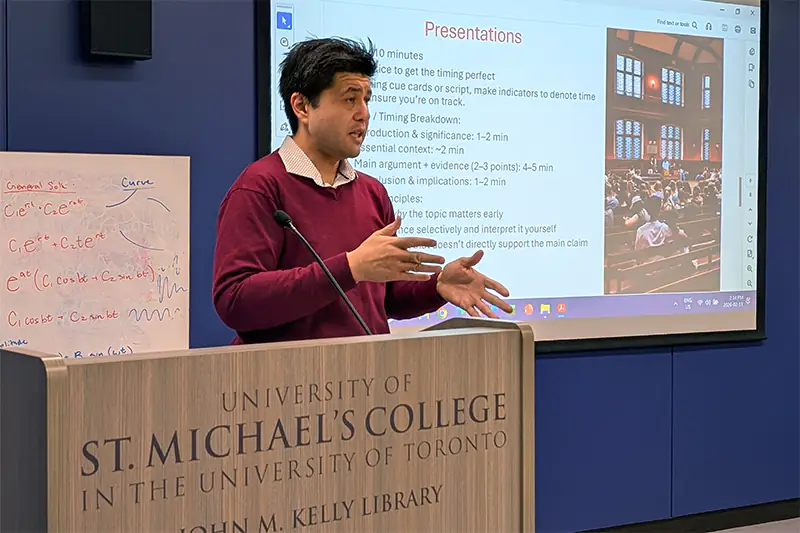
Book & Media Studies Professor Francesco Morriello offered this advice during a recent workshop on best practices for presenting at a colloquium, one of several resources available to students preparing for this year’s event.

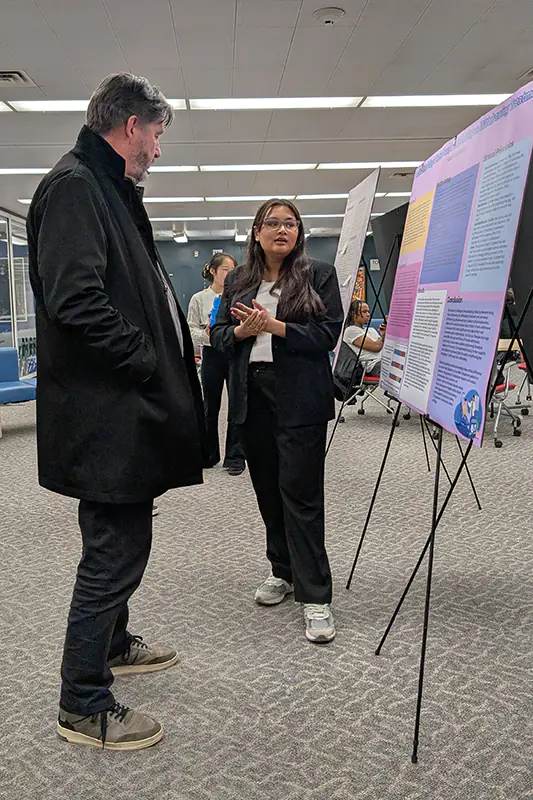
The St. Michael’s Undergraduate Research Colloquium takes place in the John M. Kelly Library on March 5 and 6. The annual event showcases research conducted by undergraduate students across disciplines, with strong representation from the College’s four sponsored programs: Book & Media Studies, Celtic Studies, Christianity & Culture, and Medieval Studies. Dedicated panels will be held for SMC programs alongside general sessions.

“The event draws attendees not only from St. Michael’s College, but also members of the public and the wider University of Toronto community,” says Morriello. “The result is a series of conversations that might not ordinarily happen, especially between arts-based and science-based research. By bridging these academic divides, the Colloquium fosters a unique intellectual environment where a question from a literature student might spark a breakthrough for a budding physicist. Ultimately, the event celebrates more than just individual achievement; it highlights the power of interdisciplinary curiosity and the vibrant, collaborative spirit that defines the St. Michael’s experience.”

Students applied to participate the same way presenters would at any academic conference, by submitting a formal proposal with an abstract and supporting details. A small panel of faculty and academic staff reviewed submissions, selected presenters, and determined the most appropriate format for each project.

As they prepare, participants have access to a range of support: workshops on presentation best practices, one-on-one help at the Academic Success Centre, and a dedicated support librarian.

This year, some panels are sponsored by SMC student groups, who frame their panel’s theme, select speakers, and may moderate the session.

Presentations will be judged by faculty and academic staff on innovative research, well-evidenced findings, and clear communication. A Student Choice Award will also be given, with undergraduate attendees casting votes for their favourite presenter. All awards will be presented at a ceremony at the end of the academic year.

“There is such a wide range of topics that anyone can find something of interest to them, whether it is AI technology, mythological figures, Sherlock Holmes, Dante’s Divine Comedy, the history of print culture, science, mental health, and more,” says Morriello.

This year’s Colloquium is open to the public—and if past years are any indication, attendees can expect to leave with something to think about.

Photo from 2025 Colloquium

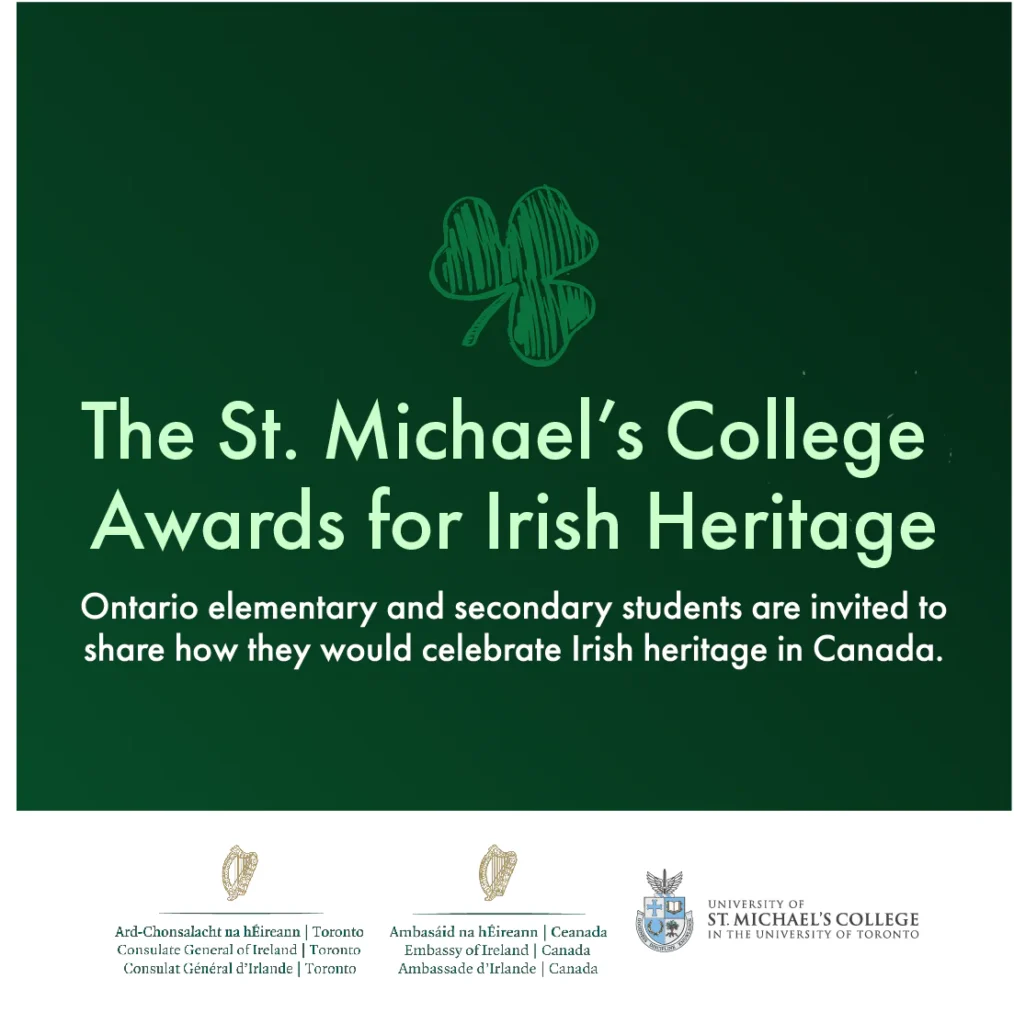
To honour Canada’s Irish Heritage Month in March, the University of St. Michael’s College in the University of Toronto, in collaboration with the Embassy of Ireland and Consulate General of Ireland, Toronto, announces awards celebrating the important historic and continuing contribution of the Irish in Canada.

Ontario Elementary and Secondary school students are invited to submit projects that explore and celebrate Irish heritage in our city, province and country.

Are You a Creative Elementary or Secondary Student from Ontario?

Explore the Irish Canadian experience and history for Irish Heritage Month through your favourite medium, whether writing an essay, poetry or a short story; visual arts like painting or photography; or something performative through video or music. Show us how you would celebrate Irish heritage in Canada!

Deadline

The deadline to submit your projects is Friday, March 27, 2026.

Awards Offered

There are six awards in total: three for elementary students and three for secondary students. Each award is valued at $100.

All award recipients will receive a certificate of achievement at a presentation ceremony at St. Michael’s in April (TBD).
Each Award of Merit recipient will also receive a $100.00 honorarium.

Criteria

Projects may offer one or a combination of the following in response to the theme of the competition: visual interpretation (e.g. painting, photography), literary interpretation (e.g. short story, poem, journal article, essay), multi-media interpretation (e.g. digital, video, recorded performance), or musical interpretation.

Submissions are expected to explore the rich and lasting realities of the Irish experience in Canada, and will be judged on originality, creativity, and quality. Projects will be adjudicated by a panel from the University of St. Michael’s College.

How to Submit

Projects can be submitted on or before Friday, March 27, 2026:

  • By email to pa.sheehan@utoronto.ca
  • Or delivered to 81 St. Mary Street, Toronto, ON M5S 1J4
  • Attention Prof. Pa Sheehan, Celtic Studies, St. Michael’s College


Questions?

Please contact Prof. Sheehan at pa.sheehan@utoronto.ca

The tragic news out of northern British Columbia impacts us all. We at St. Michael’s hold in our thoughts the victims, students, parents, teachers, and first responders of Tumbler Ridge.  We pray for them, their entire community, and for all Canadians, that we may find in each other the kindness and love that can console in this time of tragedy, and will lead to new hope.

David G. Sylvester, PhD
President & Vice-Chancellor
University of St. Michael’s College in the University of Toronto

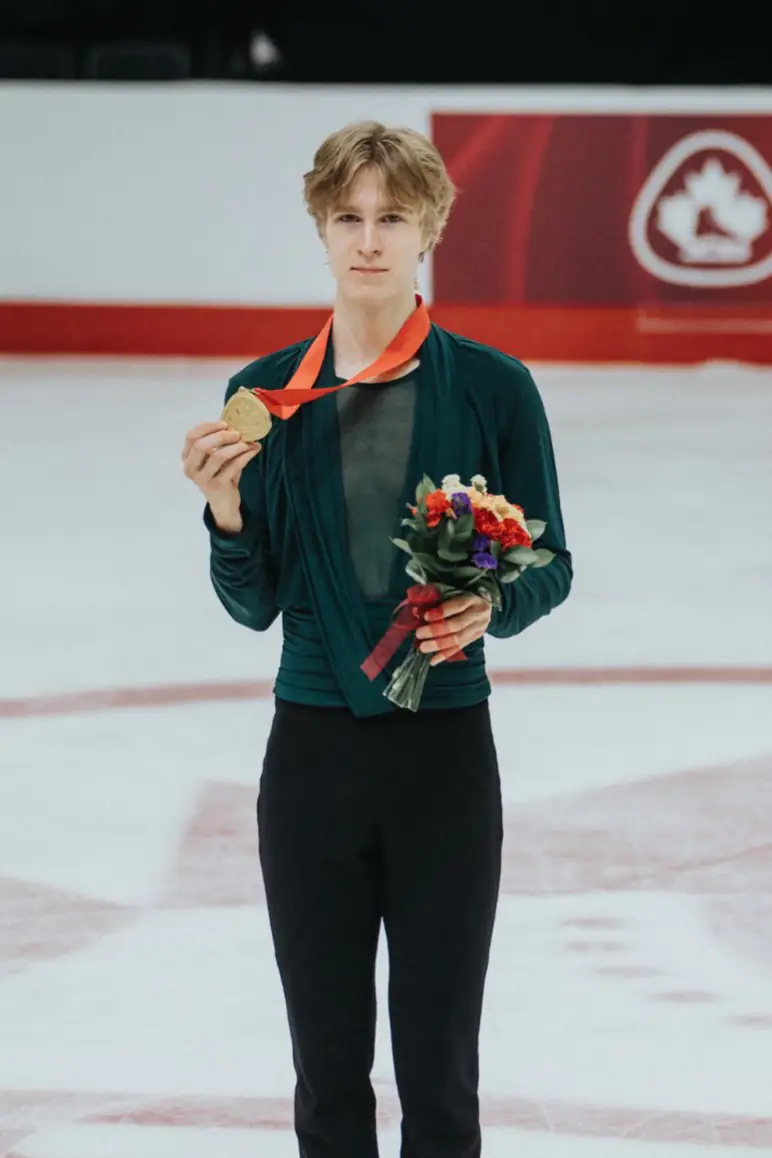
While most university students are preparing for midterms and tutorials, St. Mike’s student Stephen Gogolev is busy preparing for the Olympic Games.

He will represent Canada in men’s figure skating at the 2026 Winter Olympics in Milano Cortina, marking the culmination of what he describes as the busiest and most significant season of his career.

“I would say this is probably my comeback season. It’s definitely been my most exciting season I’ve had in skating so far,” he says.

Stephen secured his spot on Team Canada after winning the national championship title at the Canadian National Skating Championships in Gatineau, Quebec on January 10. While the announcement was thrilling, it wasn’t entirely unexpected.

“It was obviously very exciting to hear that I was named to the Olympic team,” he said. “But it was also somewhat expected at the same time, because the results of nationals were the deciding factor.”

Competing at the Olympics has long been the ultimate goal.

“It’s probably the biggest stage that you work towards,” says Stephen. “It’s a goal for all high-performing athletes, so this means a lot.”

Stephen is majoring in political science after transferring to the University of Toronto in 2024 after studying at the University of California, a move that was driven by both family and personal considerations.

“Coming back to Toronto was a mutual decision between my team and my family,” he says. “At a certain point, we felt that the negative aspects of being apart weren’t outweighing the benefits.”

Once he arrived at the University of St. Michael’s College at the University of Toronto, he was immediately impressed with the campus.

“It’s a very beautiful campus. I never knew U of T had such beautiful buildings,” he said.

Despite the demands of elite training, Stephen says his studies remain a priority. Balancing coursework with a rigorous training schedule isn’t easy, especially with extended travel.

“It can get a bit overwhelming, especially at times like these when I’ll be leaving for two weeks,” he says.

He credits teaching assistants and instructors for helping him stay on track.

“They’ve been quite supportive,” he says. “In cases where tutorial participation is part of the grade, I was told I could earn those grades back by visiting during office hours.”

Stephen leaves for Italy on February 2. In Milano Cortina, he’ll compete not only in the individual men’s short and free programs, but also as part of Canada’s skating team, adding to the already packed schedule.

“It’s definitely busier than regular competitions,” he says. “With the addition of the team event, I’ll be competing four times within seven days. which adds more physical and mental load.”

Still, he’s looking forward to more than just the competition.
“I’m excited for everything—the city, watching other events, training with teammates, exploring the food,” he said. “I think everything in general will be pretty cool.”

Even in the midst of his most successful season, Stephen is already thinking ahead. He says pursuing post-secondary education is essential, and he’s exploring interests in finance, politics, and law.

“I won’t be skating my entire life,” he said. “It’s important to think about what comes next.”

Stephen began figure skating at the age of six and before that trained as an alpine skier. Though he found early success on the slopes, he ultimately chose the ice.

“I enjoyed figure skating more,” he says. “I think it was the jumping and the technical elements, even though funnily enough I actually had more success in skiing when I was younger.”

For now, his focus is on Milano Cortina, where the St. Mike’s community will be cheering as one of its own takes the Olympic stage.

There will be a watch party in the COOP to cheer on Stephen on February 10 at 12:30 p.m.

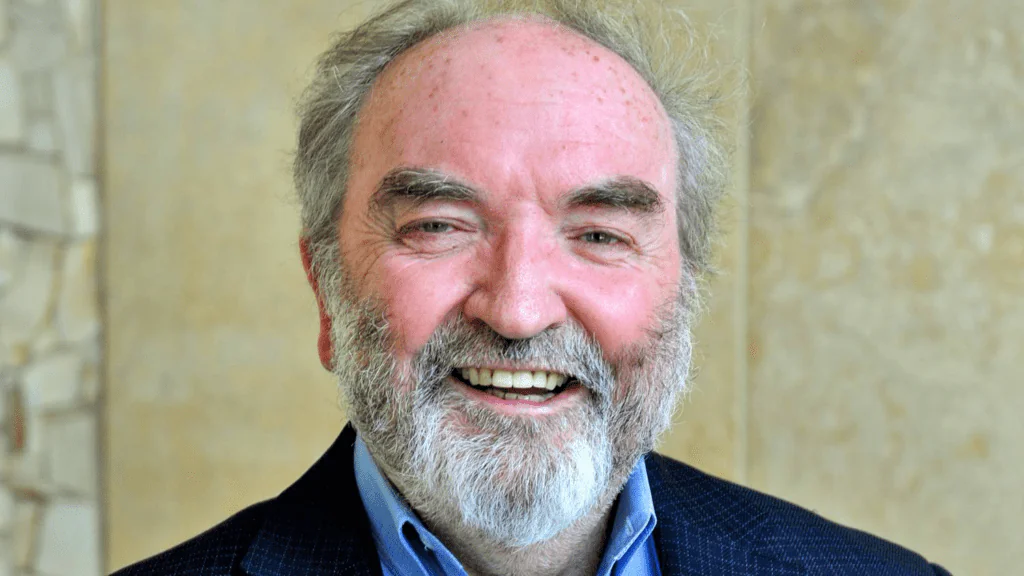
The John M. Kelly Library at the University of St. Michael’s College is celebrating the addition of the Thomas Merton Collection to its holdings with a March lecture delivered by renowned Merton scholar Dr. Michael W. Higgins.

While Merton remains known most broadly for his 1948 work, The Seven Storey Mountain, he was a multi-talented, multifaceted man, a prolific writer, poet and artist as well as a theologian and mystic who engaged in interfaith dialogue. He died in 1968 while attending a conference in Thailand.

Known in his Trappist community at Kentucky’s Abbey of Gethsemani as Father Louis, Merton remains an inspiration from cloisters and academies to literary circles and prisons, notes Dr. Higgins.

“Thomas Merton was an extraterritorial and visionary thinker, and the breadth of his intellectual range and the depth of his spirituality continue to contribute to his wide global outreach,” he says. “The fact that he has to date hundreds of theses and dissertations written on various aspects of his thought is but one marker of his durability and relevance. There has been much work done on Merton at St. Michael’s and so it is more than fitting that this Merton Collection finds a home where the plenitude of his gifts and the richness of his legacy can be both studied and treasured for ages.”

The donation of more than 500 items brings together the holdings formerly housed in the Thomas Merton Reading Room at the Vancouver School of Theology. The collection includes virtually all published works by and about Thomas Merton, along with related scholarship and audiovisual materials, including recordings of talks Merton delivered to novices at Gethsemani in the 1960s. Together, these materials document the extraordinary range of Merton’s life and thought, from Western monastic and contemplative traditions to his influential engagement with Zen Buddhism and interreligious dialogue.

“The arrival of the collection, generously donated by The Thomas Merton Society of Canada, marks a significant moment in the growth of the Kelly Library’s collections and strengthens St. Michael’s longstanding engagement with twentieth-century Catholic thought, spirituality, and culture,” notes James Roussain, William D. Sharpe Chief Librarian and Director of Special Collections at the Kelly Library. “The connection between Merton and Henri Nouwen, whose archives are held at the Kelly, offers scholars a rare opportunity to explore two deeply influential spiritual voices whose lives and writings were shaped by shared questions of contemplation, community, and social responsibility.”

The new arrivals will complement and significantly enhance the Kelly’s existing holdings of materials by and about Merton. In combination with related collections across the wider University of Toronto Libraries, the donation helps establish the University of St. Michael’s College as a compelling destination for Merton scholars and students from Canada and beyond. It also reinforces the Kelly Library’s role as a welcoming space for research that bridges theology, literature, philosophy and spiritual practice, with a collection that speaks to readers across religious traditions and to those outside formal religious frameworks altogether.

Dr. Higgins, the Basilian Distinguished Fellow of Contemporary Christian Thought at St. Michael’s, will deliver his lecture, titled Merton for Our Time: A Model of Interculturality, on March 10, 2026 at 6 p.m. in Alumni Hall 400. A reception will follow in Father Madden Hall in Carr Hall.

Dr. Higgins has been researching and writing on Merton since 1971. His 1978 doctoral dissertation on Merton and William Blake, “Thomas Merton: the Silent-Speaking Poet,” was much augmented and published in 1998 as Heretic Blood: the Spiritual Geography of Thomas Merton. He has published extensively on Merton in both peer-reviewed and general interest publications, and has researched, interviewed and narrated two CBC Ideas series on him as well as documentaries for CBC’s Celebration. He also served as the consultant for CBC’s Man Alive program, “Monk on the Run.”

He is the co-editor of Thomas Merton: Pilgrim in Process and author of Thomas Merton: Faithful Visionary and of The Unquiet Monk: Thomas Merton’s Questing Faith.

Dr. Higgins has also taught graduate courses on Merton and is Past President of both the International Thomas Merton Society headquartered at Bellarmine University in Louisville, Kentucky and of the Thomas Merton Society of Canada, headquartered in Vancouver.

Next month he will deliver lectures at Sarum College in Salisbury, England and at All Hallows College, Dublin, on the two mystics and ecological visionaries Merton and John Moriarty, as well as leading a Merton event at St. Michael’s on May 9.
“Thomas Merton was an extraterritorial and visionary thinker, and the breadth of his intellectual range and the depth of his spirituality continue to contribute to his wide global outreach,” he says. “The fact that he has to date hundreds of theses and dissertations written on various aspects of his thought is but one marker of his durability and relevance. There has been much work done on Merton at St. Michael’s and so it is more than fitting that this Merton Collection finds a home where the plenitude of his gifts and the richness of his legacy can be both studied and treasured for ages.”

The donation of more than 500 items brings together the holdings formerly housed in the Thomas Merton Reading Room at the Vancouver School of Theology. The collection includes virtually all published works by and about Thomas Merton, along with related scholarship and audiovisual materials, including recordings of talks Merton delivered to novices at Gethsemani in the 1960s. Together, these materials document the extraordinary range of Merton’s life and thought, from Western monastic and contemplative traditions to his influential engagement with Zen Buddhism and interreligious dialogue.

“The arrival of the collection, generously donated by The Thomas Merton Society of Canada, marks a significant moment in the growth of the Kelly Library’s collections and strengthens St. Michael’s longstanding engagement with twentieth-century Catholic thought, spirituality, and culture,” notes James Roussain, William D. Sharpe Chief Librarian and Director of Special Collections at the Kelly Library. “The connection between Merton and Henri Nouwen, whose archives are held at the Kelly, offers scholars a rare opportunity to explore two deeply influential spiritual voices whose lives and writings were shaped by shared questions of contemplation, community, and social responsibility.”

The new arrivals will complement and significantly enhance the Kelly’s existing holdings of materials by and about Merton. In combination with related collections across the wider University of Toronto Libraries, the donation helps establish the University of St. Michael’s College as a compelling destination for Merton scholars and students from Canada and beyond. It also reinforces the Kelly Library’s role as a welcoming space for research that bridges theology, literature, philosophy and spiritual practice, with a collection that speaks to readers across religious traditions and to those outside formal religious frameworks altogether.

Dr. Higgins, the Basilian Distinguished Fellow of Contemporary Christian Thought at St. Michael’s, will deliver his lecture, titled Merton for Our Time: A Model of Interculturality, on March 10, 2026 at 6 p.m. in Alumni Hall 400. A reception will follow in Father Madden Hall in Carr Hall.

Dr. Higgins has been researching and writing on Merton since 1971. His 1978 doctoral dissertation on Merton and William Blake, “Thomas Merton: the Silent-Speaking Poet,” was much augmented and published in 1998 as Heretic Blood: the Spiritual Geography of Thomas Merton. He has published extensively on Merton in both peer-reviewed and general interest publications, and has researched, interviewed and narrated two CBC Ideas series on him as well as documentaries for CBC’s Celebration. He also served as the consultant for CBC’s Man Alive program, “Monk on the Run.”

He is the co-editor of Thomas Merton: Pilgrim in Process and author of Thomas Merton: Faithful Visionary and of The Unquiet Monk: Thomas Merton’s Questing Faith.

Dr. Higgins has also taught graduate courses on Merton and is Past President of both the International Thomas Merton Society headquartered at Bellarmine University in Louisville, Kentucky and of the Thomas Merton Society of Canada, headquartered in Vancouver.

Next month he will deliver lectures at Sarum College in Salisbury, England and at All Hallows College, Dublin, on the two mystics and ecological visionaries Merton and John Moriarty, as well as leading a Merton event at St. Michael’s on May 9.