InsightOut: Why I Volunteer at the Book Sale

InsightOut

Grace Lake (SMC6T8) had a career in corporate communications in management, including at Teleglobe Canada, and as a consultant in PR and media. Now she serves as a docent at the Royal Ontario Museum and a one of the Friends of the Kelly Library.


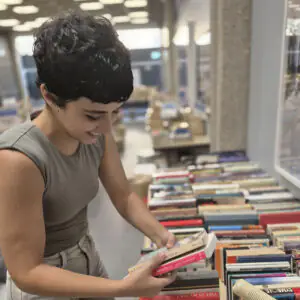
Some years back–maybe in 2015–my friend, Antoinette Fracassi, who is now on the “Board” of the Kelly Library Book Sale, asked me if I’d like to work on the Book Sale at SMC, U of T, with benefits going to support the John M. Kelly Library. I said, yes! and I have enjoyed working with this wonderful team since.

What is it that drew me to this? Well, the people running it and working on the team. They’re fun, committed to doing responsible work, and we share in the satisfaction of collaborating with the Kelly Library to contribute to the creation of beautiful projects accomplished and funded by this Book Sale for students and all using the Kelly Library now and in the future, e.g., the elegant multi-purpose study room on the main floor of the Kelly Library.

I love books, and I love people, and I much enjoyed being a student at St. Mike’s, so volunteering on this team to contribute to the Kelly Library is a fab feeling, and I feel proud of my fellow alums, Caroline Morgan Di Giovanni and Peter Rogers, who some years back, with the Planning Committee, founded the Kelly Library Book Sale at St. Mike’s.

Usually I work at the Book Sale, about two half-days, or more if needed. Also, when asked if I’d like to help with sorting, I did for a couple of years or more, during the year, in the pre-sale work of sorting the boxes of books that come in.

All kinds of people who value books come to the Kelly Library Book Sale. I’ve enjoyed volunteering with the exceptional team of dedicated people responsible for this Book Sale, the Friends of the Kelly Library. Thank you for welcoming me.


A quick survey of book sale volunteers by Kelly Library staffer Mike Jurgaitis revealed lots of reasons why our volunteers are so enthusiastic.

Here’s a sampling:

Anthony, high school student:  “My mom is here and it’s a great school and a great opportunity to get volunteering hours and experience.”
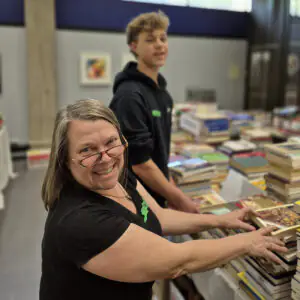
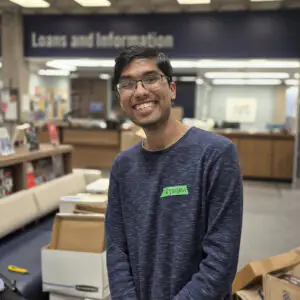
Christine, a PHD student: “Because I love organizing books and it’s the only place you can find ‘Zen Guitar’ and ‘The Devil Can’t Cook Spaghetti’!

Kristine, a first-year student: “For the books – Especially the fiction!”

Rishibh, a grad student: “It’s a very nice way to spend the free time I have and a chance to give back to the community! And then there’s the books themselves!”

Agata, a grad student: “I feel it’s cool to see rare books, including the way they’re priced and the afterlife of used books. Also, I work at the Kelly and feel good serving students.”

Khadija: “I really like reading so I wanted to get some new books – and I also wanted to make new friends.”

Asal, a graduate: “Because I want to get free books and meet people! And also you can find so many great topics!”


St. Michael’s Book Sale runs from Wednesday, September 24 to Saturday, September 27 in the John M. Kelly Library. Click for more information.


Read other InsightOut posts.
Prakash Anthony Lohale, OP, is a Dominican friar with a Licentiate in Spirituality from the Angelicum in Rome. His extensive ministry focuses on teaching, justice, and interfaith engagement. He has served in international leadership roles for the Dominican Order in Rome and as the Director for Ecumenism and Interreligious Dialogue for the Archdiocese of Toronto. He remains deeply engaged in interfaith work through several boards and committees. He currently serves as the Social Justice Animator at the Mary Ward Centre and is a sessional instructor at Regis St. Michael’s College.


I used to believe God lived in the quiet places—the hushed sanctuaries, the mountain trails, the retreat centres far from the clamour of urban life. As a lecturer teaching spirituality, I’d often framed cities as obstacles to contemplation—places you passed through on your way to peace.

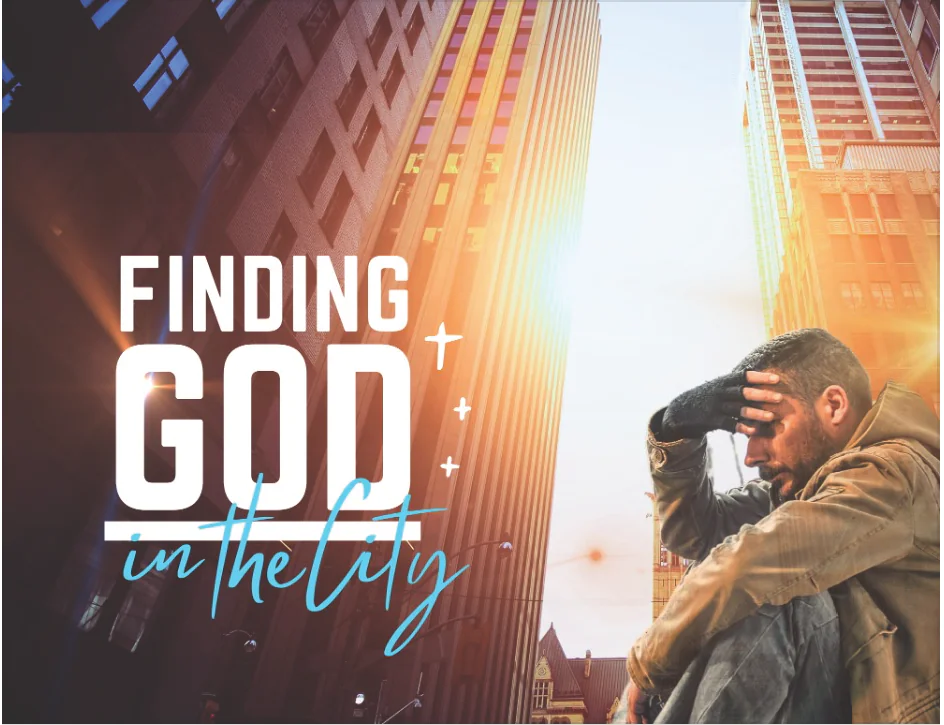
Then I was requested to teach an intensive course called Retreat on the Streets: Finding God in the City for the Regis St. Michael’s Faculty of Theology, and it revolutionized not only my teaching—but my entire way of seeing.

This wasn’t a conventional class. Our syllabus was the streets of Toronto. Our primary text was the city itself. We met less in lecture halls, but on street corners, in parks, and in community spaces. And what began as an academic experiment became one of the most spiritually formative experiences of my life.

Learning to See Again

We began with a simple but radical premise: Pay attention. On our first retreat day, I sent students—and myself—out with contemplative exercises rooted in Ignatian spirituality: “Apply your senses. Be present. Receive what is already there.”

I remember sitting on a bench in Berczy Park, amidst the dog-walkers and lunch-break crowds, and just… listened, watching people pass. I heard snippets of Mandarin, Hindi, Spanish, and Italian. I saw an elderly man leaning heavily on a walker, a young woman laughing into her phone, and a group of children chasing pigeons near the fountain. Gradually, my perception began to change. I wasn’t just observing strangers—I was witnessing stories. The sacred wasn’t hiding from the city’s noise; it was breathing within it.

That’s when Matthew Snowdon introduced the concept of the “Holy Passage.” So much of city life is spent in transit—on subways, streetcars, sidewalks. What if we saw these moments not as empty time, but as sacred time? What would it mean to treat our daily passages through the city as pilgrimages?

Unlearning to Relearn

Back in our temporary classroom, we gave words to what we’d felt outside. We studied Toronto’s Indigenous history, acknowledging that this land was sacred long before it was a city. We watched documentaries on the history of York, and I saw students’ faces change as they realized the ground beneath our feet held ancient stories, treaties, and wounds.

We visited the Canadian Native Centre. Sitting in a traditional Lodge, listening to Noah Macdonald and other First Nations speakers, was humbling. It reoriented us. You can’t speak of God’s presence in a place without honouring the people who first recognized that presence here.

We also read Deacon Robert Kinghorn’s The Church on the Street, which challenges readers to see those often overlooked—the homeless, the addicted, the marginalized—not as problems to be solved, but as people in whom God is present. That wasn’t just theology; it became our practice. We talked about how true hospitality isn’t inviting someone into your space, but recognizing you already share space—the same streets, the same air, the same humanity.

The theoretical framework from our readings—like Philip Sheldrake’s The Spiritual City—came alive on these retreats. The doctrine of the Incarnation—God with us—was no longer abstract. It was embodied in the people around me.

The Revelation in the Relationship

By our second retreat day, something had changed. We walked through Kensington Market and no longer just saw hipster cafés and vintage stores—we saw a living example of shared economy and community. The clang of the streetcar wasn’t noise; it was the rhythm of a collective journey.

One afternoon, I was on the Bloor-Danforth line during rush hour. The train was packed—shoulder to shoulder, heat and breath and silence. And then it hit me: This is it. This crowded, noisy, imperfect train was a thin place. Not despite its intensity, but because of it. Here was life, in all its friction and beauty. Here was God, not distant, but intimate—in the tired eyes of the nurse heading home, in the patient slump of the student, in the kind gesture of someone making room.

I didn’t need to escape the city to find peace. I needed to learn how to see within it.

A New Urban Spirituality

That course reshaped my teaching and my faith. I no longer see cities as spiritual deserts. They are landscapes of revelation—if we have the eyes to see.

God isn’t waiting for us in quiet places far from the noise. God is here—in the hum of the streetcar, in the diversity of our neighbourhoods, in the struggle for justice and belonging. The divine is present not only in stained glass and hymnody, but in the messy, glorious, and holy encounter with our neighbour.

The revelation was always here. We just needed to learn how to see.

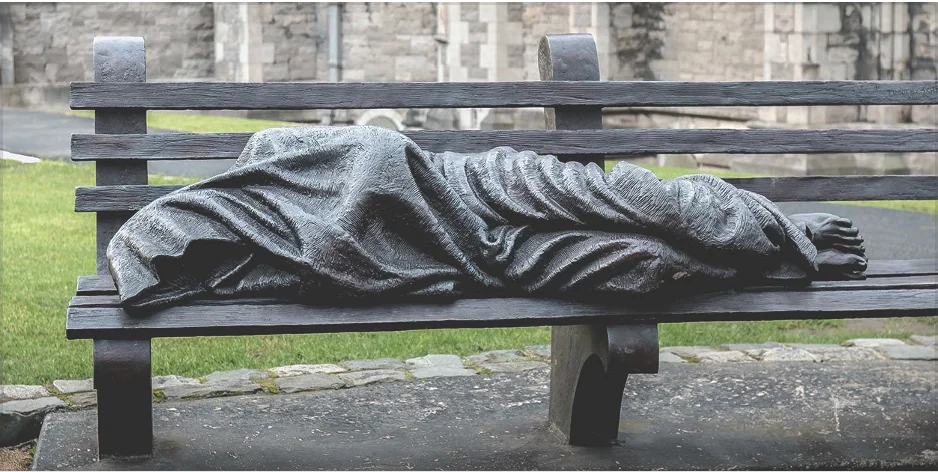
One of the thirty Homeless Jesus sculptures by Canadian artist Timothy Schmalz. Credit: Pierre-Olivier / Shutterstock.com

Read other InsightOut posts.

Mike Jurgaitis, a library technician for the James M. Kelly Library, enjoys science fiction, playing guitar and listening to the Jays on the radio. The son of Lithuanians who came to Canada to avoid Soviet occupation, Mike loves the Toronto Blue Jays and is hoping to do his first Vipassana meditation course in Barrie this year.


There have been a lot of surprises in my first months as a library tech with the John M. Kelly Library at St. Mike’s. Maybe the most inspiring jolt has been learning about an unsung group of superheroes known as “the Friends” or FOTKL.

If you haven’t heard of this merry band, their full name is the Friends of the Kelly Library. They’re volunteers, mostly alumni, united by a love for the Kelly Library. The role they play is a key one: raising funds for the library by finding donated books and then selling them in book sales, which they meticulously organize, year after year. Thanks to their hard work, the Kelly has been able to afford a lot of extra perks. New whiteboards for student collaboration; repainted study rooms with upgraded new monitors; soft and comfy seating and brand-new furnishings: these are just some of the things made possible by the Friends of the Kelly Library.

It’s been an experience watching the Friends in action. This summer, on one of the hottest days of the year, I witnessed the team swarm the library loading dock. They formed a human chain, extracting more than 100 heavy boxes of donated books from out of two large moving vans. Weeks later, an even larger donation of books came in – more than 300 boxes – but there was a problem: the loading bay was by now filled to the rafters with books from the previous sweat-fest. Their solution: to organize another human chain, this one going from the loading bay to the library elevators. It took most of the morning. But, by the end, after almost breaking the elevator, we had got it done, filling up the entire basement, including the old, abandoned washrooms down there, with boxes and boxes of books.

When it comes to the donations they collect, there are always surprises. Once, tucked away in some old boxes, the team discovered dozens of plastic rosaries and religious decorations, including a snow globe of Saint Teresa. (We ended up giving most of it away to the students, who appreciated the freebies).  As for the actual books they get, expect anything.  I still remember a donation of tiny “micro-Bibles,” each one not much bigger than a thumbtack.

My contract with the library is winding down. But I’ll always feel lucky to have met so many wonderful, spirited people. I learned a lot from everyone at the Kelly – including how a small group of well-organized and dedicated people like the Friends can make a huge difference. They’re clearly one of the secret engines that help keep this world-class library afloat.

If you’d like to meet some of these Super Friends yourself, they’re holding a huge book sale from September 24 to 27th at the Kelly Library. Books will be priced as low as $2 per book, or 20 dollars for an entire box. You can find more details at https://uoft.me/SMCbooksale. Hope to see you there!


Read other InsightOut posts.

Dear Students,

Welcome to the 2025-2026 academic year. Whether you are in your first year or your fourth, we are glad you are with us.

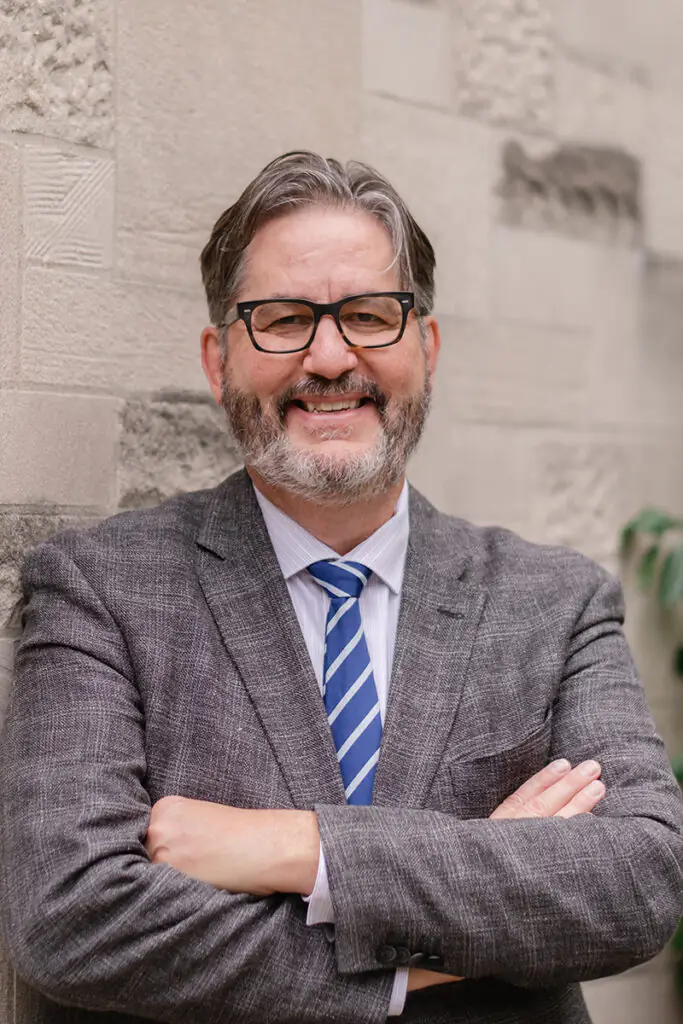
Along with a welcome, I offer each of you a challenge: to make a deliberate effort this month to get connected to this community. Of course, you will be focused on your classes, but take the time to explore intramurals, campus ministry, student government, and lectures. Are you a singer, a debater, a musician, an athlete, an aspiring student leader, or are you interested in social outreach opportunities? The opportunities available to you are yours for the asking, and now is the time to engage.

Each one of you brings something unique and invaluable to St. Mike’s. Your very presence contributes to a vibrant community that values diversity and respects differences. Community engagement is the hallmark of St. Mike’s, and it will be a big part of your academic success at U of T. The gifts you bring to the table enriches this community we call St. Mike’s.

Work hard in your classes, make the most of your time, have fun, join clubs—and reach out should you need help. The St. Mike’s community is strong and supportive, and we want to help you achieve your goals.

I hope to see you all at Clubs Day, and please mark Monday, September 29th on your calendar as we will come together to celebrate Michaelmas across campus. There will be feasting!

Sincerely,

President David Sylvester